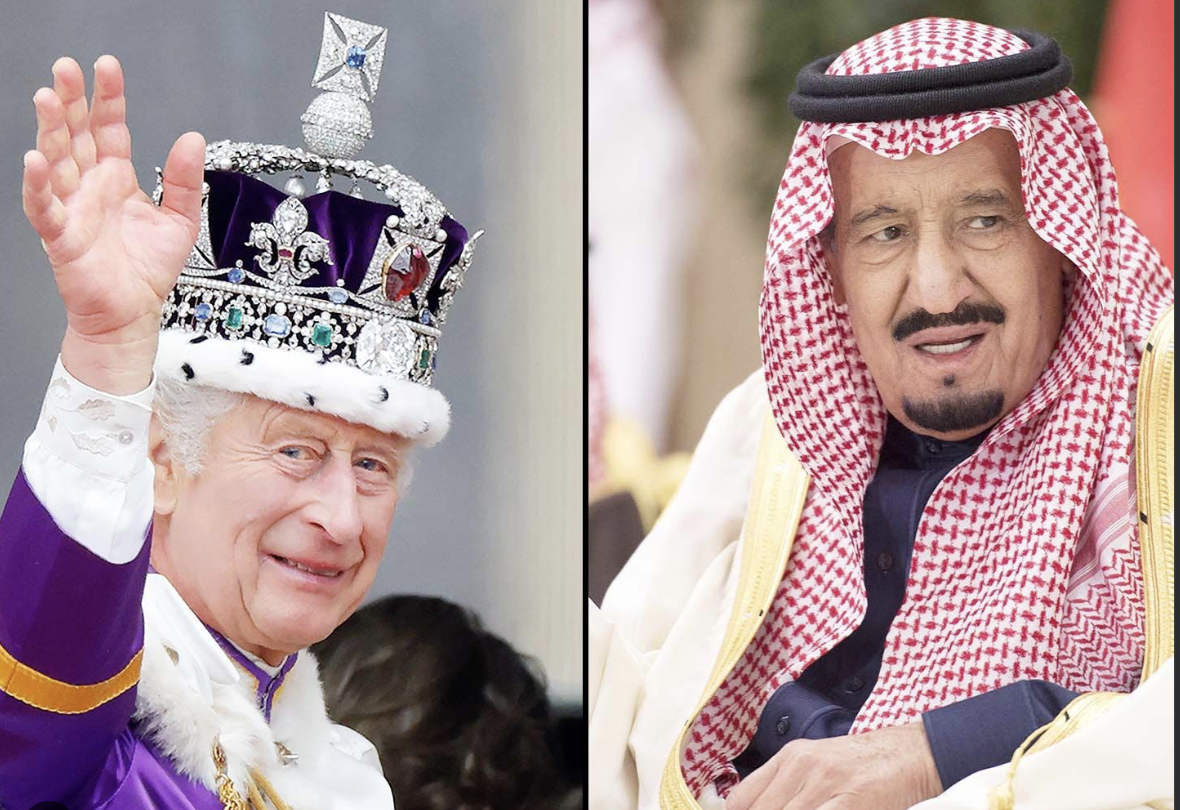
Who are the top 10 richest royal families in the world in 2026? Royal families represent one of the most difficult forms of wealth to measure. Unlike a publicly traded company founder, a monarchy may have access to palaces, land, sovereign investment funds, art collections and state-owned businesses that are not necessarily the personal property of the ruling family.
For that reason, estimates that claim a royal family “owns” an entire sovereign wealth fund should be treated cautiously. The most credible recent family-wealth data comes from Bloomberg’s December 2025 ranking, which placed three royal dynasties among the four richest families on earth:
- Al Nahyan of Abu Dhabi — $335.9 billion
- Al Saud of Saudi Arabia — $213.6 billion
- Al Thani of Qatar — $199.5 billion
The remainder of this list uses publicly reported estimates of dynastic or identifiable family wealth—not the total assets of the countries they govern.
Top 10 Richest Royal Families in 2026
10. Grand Ducal Family of Luxembourg
Country: Luxembourg
Luxembourg’s monarchy is considerably less wealthy than the giant Gulf dynasties. The Grand Ducal family nevertheless holds substantial historic assets and investments associated with one of Europe’s oldest monarchies.
Estimates of its private wealth vary considerably, which is why exact figures should not be treated as audited values.
9. House of Liechtenstein
Country: Liechtenstein
The princely family of Liechtenstein has an unusual advantage: substantial business assets independent of state property. The family’s wealth has historically been associated with investments and banking interests, including LGT Group.
This makes the Liechtenstein fortune easier to distinguish from government wealth than many royal dynasties.
Read Also: Top 10 Richest Families in the World
8. Alaouite Dynasty
Country: Morocco
Morocco’s Alaouite dynasty is headed by King Mohammed VI. The royal family’s business interests have been associated with investments spanning banking, mining, telecommunications and real estate.
A 2026 analysis estimates private and dynastic family wealth in the several-billion-dollar range, although the exact value is difficult to verify because many holdings are privately owned.
7. Al Maktoum Family
Emirate: Dubai, United Arab Emirates
The Al Maktoum dynasty has ruled Dubai since the 19th century. Dubai’s transformation from a regional trading center into a global hub for:
- Aviation
- Tourism
- Finance
- Real estate
- Logistics
has greatly expanded the economic influence surrounding the ruling family.
However, Dubai government entities such as sovereign investment vehicles should not automatically be counted as private royal-family wealth. That distinction is essential when comparing monarchies.
6. House of Bolkiah
Country: Brunei
Brunei’s royal family is led by Sultan Hassanal Bolkiah. The country’s petroleum wealth has supported one of the world’s most lavish monarchies. The Sultan is famous for an enormous palace, extensive automobile collection and other luxury assets.
But as with the Gulf monarchies, separating the sovereign wealth of Brunei from the personal wealth of its ruler is complicated.
5. Chakri Dynasty
Country: Thailand
Thailand’s monarchy controls substantial assets through institutions historically associated with the Crown Property Bureau. King Maha Vajiralongkorn has frequently appeared on lists of the world’s wealthiest monarchs. The family’s wealth includes significant property and investment interests.
Again, estimates vary because the legal treatment of royal assets differs from conventional private ownership.
Read Also: Top 10 Richest People in the World
4. Al Sabah Family
Country: Kuwait
The Al Sabah dynasty has ruled Kuwait for centuries. Kuwait possesses one of the world’s oldest and largest sovereign wealth funds. However, the assets of the Kuwait Investment Authority belong to the state—not personally to the ruling family.
This is where many internet rankings become misleading. The royal family itself is unquestionably wealthy, but estimates should distinguish private and dynastic holdings from Kuwait’s national investment portfolio.
3. Al Thani Family — About $199.5 Billion
Country: Qatar
The Al Thani family rules Qatar.
Bloomberg’s latest comprehensive family-wealth ranking estimated its fortune at approximately $199.5 billion. Qatar’s enormous natural-gas reserves helped transform it into one of the world’s wealthiest countries.
Members of the ruling family also hold extensive investments and property interests. The Qatar Investment Authority manages hundreds of billions of dollars globally, but those assets are sovereign holdings rather than the family’s personal bank account. That distinction should be maintained.
2. Al Saud Family — About $213.6 Billion
Country: Saudi Arabia
The House of Saud is one of the world’s largest royal dynasties, with thousands of extended family members. Bloomberg estimated identifiable family wealth at approximately $213.6 billion in its latest ranking.
Saudi Arabia’s oil resources laid the economic foundation for extraordinary royal wealth. But Saudi Aramco and the Public Investment Fund should not simply be added to the royal family’s personal fortune. They are state assets.
Bloomberg notes that the total wealth controlled by the huge extended family could nevertheless be considerably higher than its measurable estimate.
1. Al Nahyan Family — About $335.9 Billion
Emirate: Abu Dhabi, United Arab Emirates
The Al Nahyan dynasty is the richest royal family under Bloomberg’s latest measurable family-wealth methodology. Bloomberg estimated the family’s fortune at approximately $335.9 billion.
The family rules Abu Dhabi, which possesses most of the UAE’s oil reserves. The emirate also operates enormous sovereign investment organizations. Those state-controlled assets should not be confused with private family ownership, but the Al Nahyan family’s identifiable private and dynastic holdings are still sufficient to place it among the richest families of any kind in the world.
Read Also: Top 10 Richest People in Africa
Why Royal Wealth Is So Difficult to Calculate
Consider three types of assets:
1. Personal assets
These can include:
- Private businesses
- Houses
- Investments
- Yachts
- Art
- Personal bank accounts
These legitimately contribute to net worth.
2. Dynastic assets
These may be held collectively through trusts or family investment companies. Determining which family member owns what can be difficult.
3. State assets
These include:
- Sovereign wealth funds
- Government companies
- National oil companies
- State land
- Government palaces
These are not automatically personal royal wealth.
Any ranking that simply says:
sovereign wealth fund + national oil company = royal family’s net worth
is misleading.
Royal Families Among the World’s Richest Families
One of the most remarkable findings from Bloomberg’s family ranking is that royal dynasties occupy three of the top four positions.
The latest comparison placed:
- Walton family — $513.4B
- Al Nahyan — $335.9B
- Al Saud — $213.6B
- Al Thani — $199.5B
Only Walmart’s Walton family outranked all three royal dynasties.
Which Royal Family Is Actually the Richest?
Using Bloomberg’s identifiable-family-wealth methodology:
The Al Nahyan family is No. 1.
Using broader estimates that combine political control over state assets, other rankings sometimes put Saudi Arabia’s House of Saud first.
But those comparisons mix two fundamentally different concepts:
ownership and control.
For TopMost10, the more defensible approach is to rank identifiable private or dynastic wealth and explicitly keep state assets separate.
The Difference Between a Rich Country and a Rich Royal Family
Qatar provides a good example. Qatar’s sovereign investment authority holds enormous assets. That does not mean the Emir can personally sell the sovereign fund and keep the money.
Similarly:
Saudi Aramco ≠ Mohammed bin Salman’s personal property.
ADIA ≠ the Al Nahyan family’s personal investment account.
Keeping those distinctions clear makes an article much more trustworthy.
Final Thoughts
Royal wealth is fascinating precisely because it sits at the intersection of family ownership, history and government power.
But it also makes simplistic rankings dangerous. The clearest independently reported figures currently put three Gulf dynasties far above most other monarchies:
Al Nahyan — approximately $335.9 billion
Al Saud — approximately $213.6 billion
Al Thani — approximately $199.5 billion
And among them, Abu Dhabi’s Al Nahyan family currently ranks as the world’s richest royal dynasty under Bloomberg’s measurable family-wealth methodology.
Frequently Asked Questions
What is the richest royal family in the world?
The Al Nahyan family of Abu Dhabi, based on Bloomberg’s latest identifiable family-wealth estimate of approximately $335.9 billion.
Is the Saudi royal family worth $2 trillion?
Claims around $2 trillion generally combine private royal wealth with assets controlled by the Saudi state. Bloomberg’s much more conservative identifiable-family estimate is $213.6 billion.
Is a sovereign wealth fund owned by the royal family?
Generally no. Sovereign wealth funds are state investment vehicles, even when members of a royal family exercise significant political influence over them.
Which royal family rules Qatar?
The Al Thani family.
Which royal family rules Abu Dhabi?
The Al Nahyan family.